1-finance-logo
India Macroeconomic Indices

1 Finance Macroeconomic Index

Index providing insights into India’s economic phases and growth outlook. The 1 Finance Macroeconomic Index determines the growth of the economy.

View Now

Subindices

Comprehensive real-time indices tracking India’s economic trends and performance.

Services Sector Activity Index

Services Sector Activity Index

Tracks India’s services sector growth and employment trends.

Industrial Sector Performance Index

Industrial Sector Performance Index

Output and performance of industries involved in manufacturing, production, and related activities.

Agriculture Output Index

Agriculture Output Index

Monitors India’s agricultural production and growth.

Consumer Inflation Index

Consumer Inflation Index

Tracks and provides a timely insight into India’s CPI trends.

Equity Market Optimism Index

Equity Market Optimism Index

Gauge Indian equity market sentiments and investor confidence.

Global Economic Impact Index

Global Economic Impact Index

Assesses the impact of global influences on India.

Financial Sector Soundness Index

Financial Sector Soundness Index

Evaluates banking stability and financial health.

Interest Rate Outlook Index

Interest Rate Outlook Index

Monitors repo rate trends to understand economic phases and monetary policy stance.

Economic Indicators

Economic Indicators

A comprehensive snapshot of India’s key economic indicators, including sectoral performance, inflation, interest rates, equity market optimism, financial sector soundness and global impact metrics. This section offers contextual insights into the country’s economic health and trajectory, helping inform data-driven investment decisions.

India's Economic Dashboard

An overview of India's Economy

India's Economic Calendar

NEW

High-Frequency Economic Indicators

An extensive collection of high-frequency economic indicators

Services Sector ActivityIndustrial Sector PerformanceAgriculture OutputConsumer InflationEquity Market OptimismFinancial Sector SoundnessGlobal Economic ImpactInterest Rate OutlookOther HFIsKey Economic Indicators
Global Market P/E
Reports and Resources
Asset Allocator
1 Finance Macroeconomic Index

Subindices

Services Sector Activity IndexIndustrial Sector Performance IndexAgriculture Output IndexConsumer Inflation IndexEquity Market Optimism IndexGlobal Economic Impact IndexFinancial Sector Soundness IndexInterest Rate Outlook Index

Economic Indicators

India’s Economic DashboardEconomic CalendarNEWHigh-Frequency Economic Indicators
Global Market P/E

Reports and Resources

BlogsMonthly UpdatesQuarterly UpdatesWhite PapersAnnual Reports
Asset Allocator
Subindices

Global Economic Impact Index

Global Economic Impact Index

Global Economic Impact Index

Current Phase

Weak Recovery
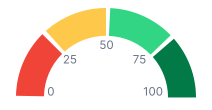
Index Value: 22.69

80% Success rate

Summary

A weak recovery typically indicates a slow acceleration in the pace of global economic activity, characterised by a range of global factors that contribute to domestic economic activities.

More on Interpretation
Index Value
Index value with Current Account Balance as % of GDP
1Y
5Y
10Y
MAX

Index Value (LHS)

How to Embed this Chart?

Current Phase

Weak Recovery

Index Value: 22.69

80% Success rate

Summary

A weak recovery typically indicates a slow acceleration in the pace of global economic activity, characterised by a range of global factors that contribute to domestic economic activities.

Global Economic Impact Index

1-finance-logo

Showing: Index Value • Range: 10 Years

Index Value (LHS)

Last Updated: 30 Jun, 2026
Source:CMIE Economic Outlook, 1 Finance Research
Source: CMIE Economic Outlook, 1 Finance Research
Last Updated: 30 Jun, 2026
Source:CMIE Economic Outlook, 1 Finance Research
Source: CMIE Economic Outlook, 1 Finance Research

Overview

Recent Updates

  • India's foreign exchange reserves stood at US$666.9 billion as of the week ending 26 June 2026, remaining among the largest reserve buffers across emerging markets despite fluctuations during the month driven by valuation changes and RBI interventions.
  • India's merchandise trade deficit widened to US$30.43 billion in June 2026, with merchandise exports at US$40.41 billion and imports at US$70.84 billion, reflecting continued external sector pressures despite resilient services exports.
  • Foreign Portfolio Investors (FPIs) remained net sellers of Indian equities, withdrawing ₹49,340 crore during June. However, record debt inflows exceeding ₹52,272 crore helped cushion capital flows, while the rupee recovered to around ₹94.3–94.6 per US dollar after touching record lows in May.
  • Brent crude prices moderated to around US$73–80 per barrel during June as geopolitical tensions eased, providing some relief to India's import bill and inflation outlook. Nevertheless, global trade uncertainties, shipping disruptions, and tighter global financial conditions continued to pose risks to India's external sector.

Near-term Outlook

  • India's external sector is expected to remain resilient despite global uncertainties, supported by strong services exports and comfortable foreign exchange reserves.
  • Brent crude prices are likely to remain in the US$70–85 per barrel range, although geopolitical developments could result in intermittent volatility.
  • The current account deficit is expected to remain broadly within the 1.5–2.0% of GDP range, with services exports and remittances continuing to provide support.
  • Global trade conditions, shipping disruptions, and monetary policy decisions by major central banks will remain key external risks over the near term.

Description

What is the Global Economic Impact Index?

Global Economic Impact Index offers insights into the domestic economy’s response to global developments and the ability to attract foreign investments by tracking indicators such as FPI investments, External Commercial Borrowings (ECBs), Forex reserves, Crude oil prices, and Trade balances. Global Economic Impact Index provides critical input for assessing India's resilience to withstand external adversities.

What are its components?

The index covers diverse economic parameters, covering both domestic and global economic developments, policy or geopolitical impact on Indian economy and investor sentiments. We have assigned appropriate weights to each of these indicators based on their relevance in reflecting the global economic developments.

The High Frequency Indicators (HFIs) include:

Baltic Dry Index

Crude Oil Price (Indian Basket)

External Commercial Borrowings (ECBs)

Foreign Exchange Reserves

Foreign Tourist Arrivals

Gross Foreign Direct Investment (FDI)

Gross Foreign Portfolio Investment (FPI)

Import Cover (Months)

Usability

How to use the Global Economic Impact Index for better financial decision-making?

Analysing the Global Economic Impact Index offers a comprehensive understanding of how global economic trends can affect the Indian economy. It is also crucial for individuals involved in sectors sensitive to international trade dynamics. It helps in making informed decisions related to investments, job security, foreign investments, liabilities management, and long-term financial planning.

Insights

Impact on Domestic Markets: Global economic conditions significantly influence stock markets, commodity prices, and foreign exchange rates. For instance, strong global growth can boost stock market returns, particularly in export-driven sectors like IT and pharma.

Investment Decisions: The index can help gauge the health of global economic conditions. Industries heavily reliant on global trade, like tourism and IT, are directly affected by global economic shifts. Tracking the index closely before investing in equities, especially in sectors benefiting from strong global trade is crucial for better returns.

Currency Fluctuations and Foreign Investments: Global economic uncertainties can lead to significant fluctuations in currency exchange rates, impacting the value of foreign investments and costs of imports. Stability in the global economy supports domestic trade and stability in foreign exchange markets, and also provides favourable conditions for foreign investments.

Interest Rate Sensitivity: Global economic trends can influence domestic interest rates, affecting loan costs, especially for businesses in international trade. Understanding the global economic trends and its impact on India can help predict interest rate movements, which affects the cost of external borrowings and especially for funds invested in globally exposed sectors, or sectors which are sensitive to global economic conditions.

Historical Events

Apr

2025

Rise of Protectionism around the World: US and EU Elections

The EU and the US are India’s largest trading partners and a key source of FDI and Exports. Donald Trump’s victory in the 2024 elections and his subsequent announcement of reciprocal tariffs on trading partners reignited the concerns around protectionist policies as a means.

Oct

2023
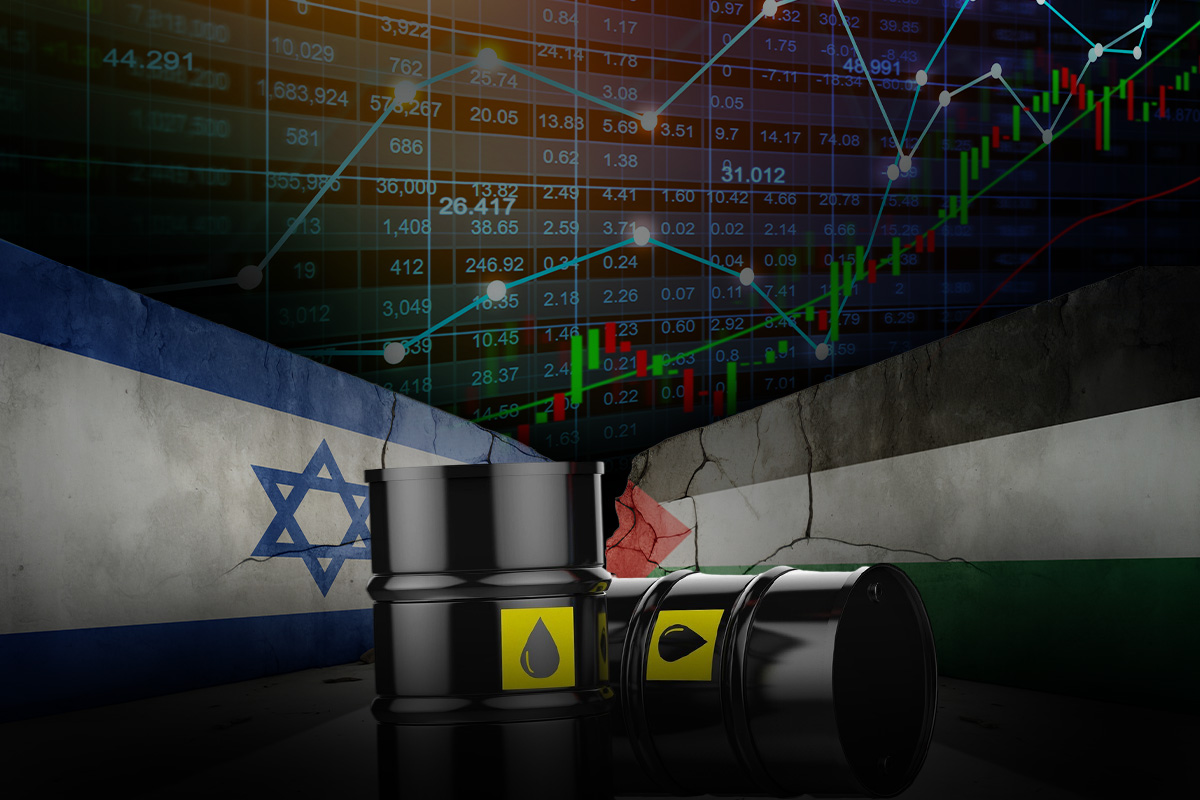
Israel-Palestine Conflict

The current phase of the Israel-Palestine conflict erupted in Oct 2023, when Hamas, the Islamist group governing Gaza, launched a large-scale attack on Israel, killing over 1,200 people and taking more than 250 hostages. Israel responded with a declaration of war, imposing a complete siege on Gaza and launching extensive airstrikes and a ground invasion. Israel has conducted a large-scale military campaign in Gaza, aiming to dismantle Hamas.

Feb

2022

Russia-Ukraine War

The Russia-Ukraine War, with Russia’s military intervention in Ukraine on February 24, 2022, was a major geopolitical conflict that has caused widespread international concern and economic repercussions. It marks a severe intensification of the long-standing tensions between Russia and Ukraine.

Dec

2020
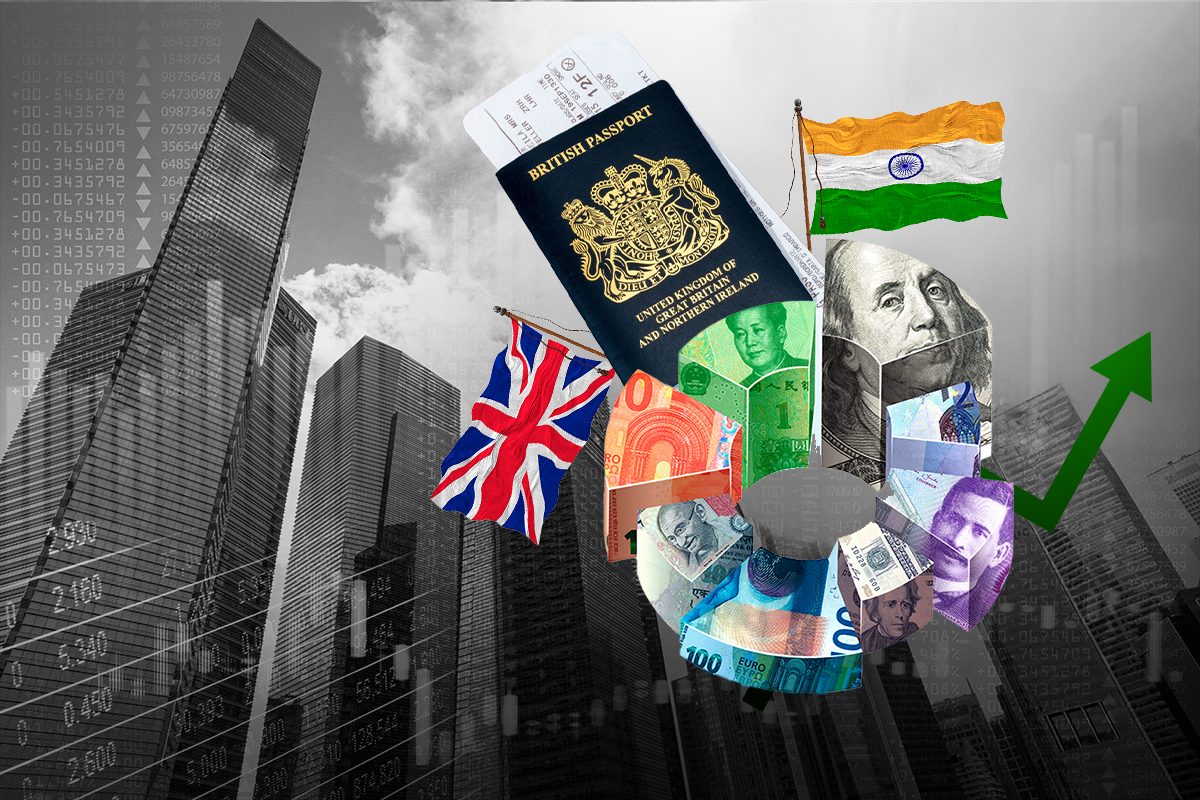
BREXIT

Brexit, the withdrawal of the United Kingdom (UK) from the European Union (EU), was a major geopolitical event finalised on December 31, 2020. It marked the end of a 47-year membership, leading to significant trade and political implications globally.

Mar

2020

COVID-19 Pandemic and Lockdown

The COVID-19 pandemic, a global health crisis caused by the novel coronavirus, began affecting India significantly from March 2020. Characterised by widespread infections, lockdowns, and public health emergencies, the pandemic has had profound implications on the Indian economy and society. According to the Ministry of Health and Family Welfare (MoHFW), COVID-19 caused 5,33,318 deaths as of December 19, 2023.