Three Pressures Are Closing in on India
Every thread in this edition traces the same gap: what's being said and what's actually happening. India's own tariff rate has been rewritten three times in a year, even as the BRICS bloc it just hosted pushed back on tariffs and dollar dependency without naming the US directly. The dollar's share of global SWIFT payments just hit a decade high anyway. RBI has held its repo rate through eight straight months of rising inflation while calling its stance neutral, and the Fed just ended its own holding pattern with a hike.
We think the connecting question for advisors is the same one asked three ways: how much room does India actually have to hold its ground, on trade, on the rupee, and on rates, while the external environment tightens around it. Our read: less than the headline numbers suggest.
Key Takeaways
| Factor | Key Takeaway |
|---|---|
| Tariffs | It's the instability that matters: three legal bases in twelve months, not the rate itself. That's what's kept FII flows cautious. |
| Fed Policy | The Fed has turned hawkish after months on hold, and that shift now presses directly on India's own rate decisions. |
| India's Repo Rate | RBI is holding even as its gap with the Fed narrows, raising the odds of a hike unrelated to domestic inflation. |
| Inflation | The 4.82% headline is skewed by one category, gold and silver jewellery. Not a broad demand story; don't treat it as one with clients. |
| Real Interest Rates | Real returns on cash and FDs have thinned all year and keep eroding regardless of where rates go next, worth flagging for clients parking cash there. |
The Fed Just Hiked and Signals More to Come
The Fed held its policy rate steady at 3.50 to 3.75% through five straight meetings this year, from January through July, even as three committee members dissented at the July meeting in favour of a hike. That held pattern broke on September 16, when the FOMC raised the federal funds rate by 25 basis points to a target range of 3.75 to 4.00%, citing inflation that "remains elevated" relative to its 2% goal.
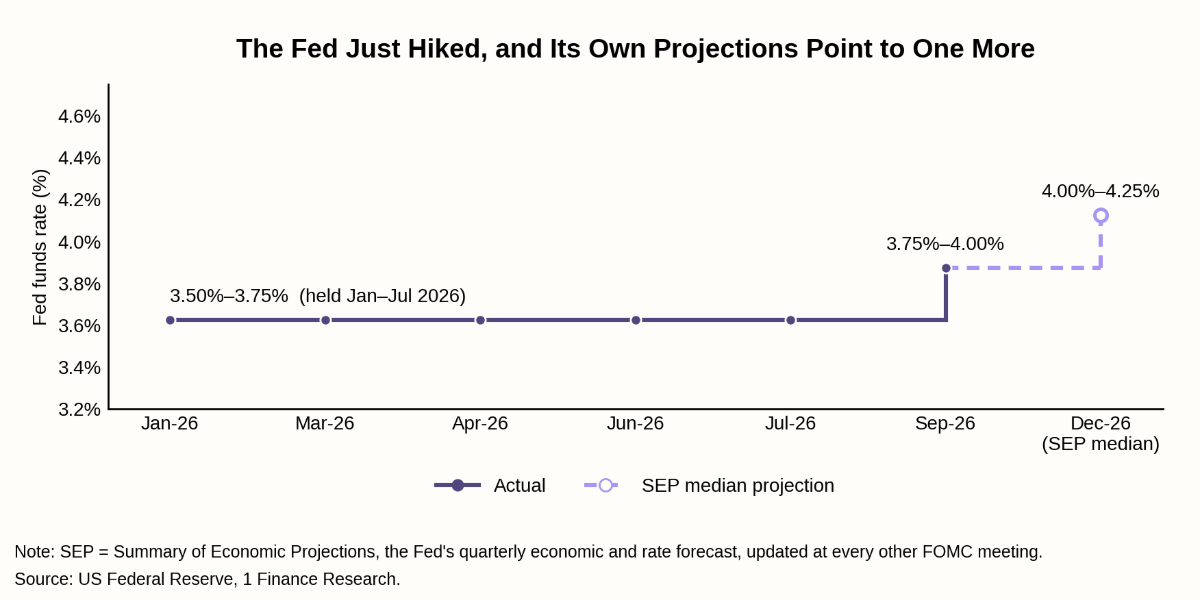
This was the first meeting under new Fed Chair Kevin Warsh, who took over in May and has described the 2% target as a "firm, fixed" commitment. The Committee's Summary of Economic Projections puts the median year-end 2026 rate at 4.1%, which implies one more 25 basis point move before December.
A US central bank turning hawkish just as India's own MPC holds flat against rising inflation is where this gets useful for client conversations.
India's Repo Rate Is Facing Its Biggest Test Yet
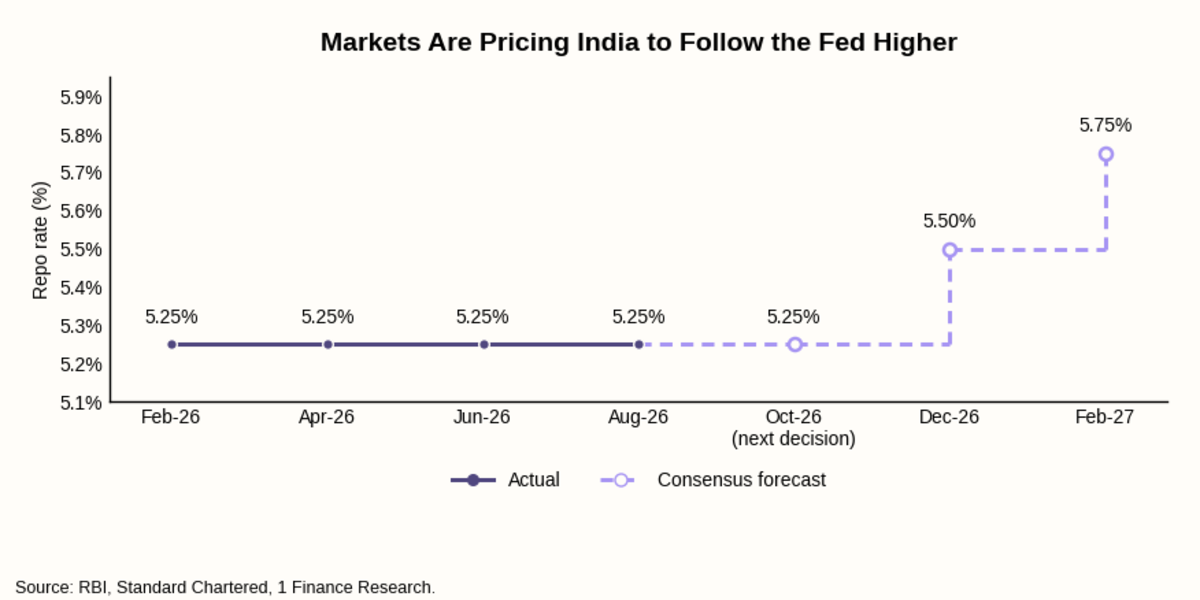
RBI has held the repo rate at 5.25% through every review this year, after 125 basis points of cuts in 2025. What's changed is that the Fed just moved and India hasn't, yet.
The rupee felt it immediately, closing at 95.96 to the dollar on September 16, a six-week low, with RBI intervening to defend the 96 level. Every basis point the Fed adds narrows the incentive for capital to stay in India over the US.
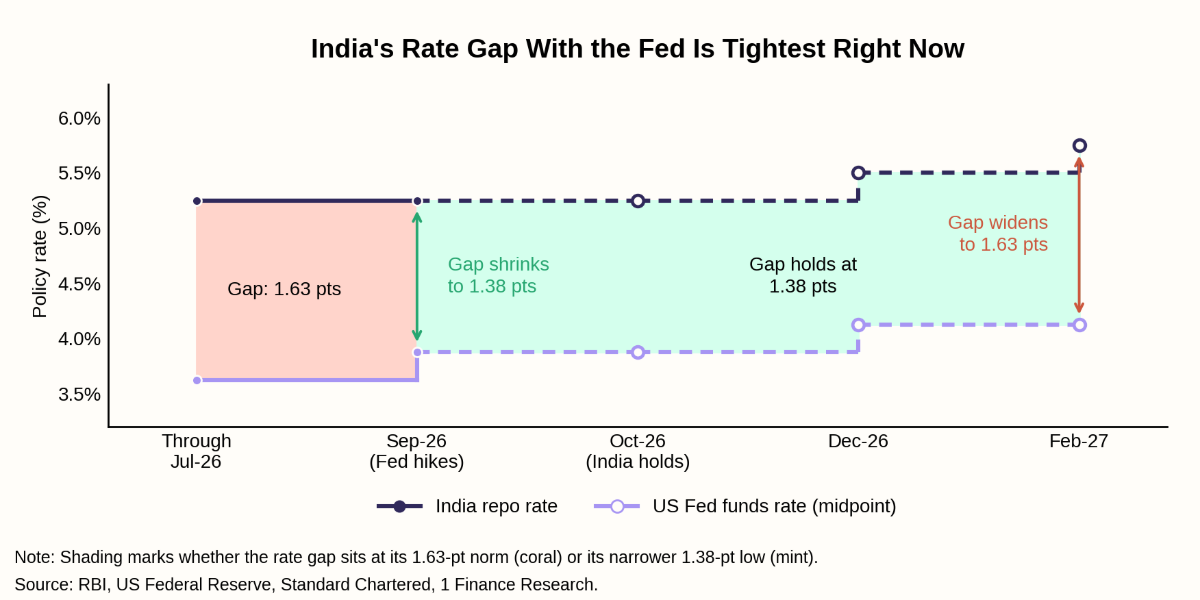
The India-Fed rate gap held steady near 1.63 points through July. The Fed's September hike alone compressed it to about 1.38 points, and it stays tight through India's October 5-7 review even if RBI holds.
Markets are pricing a hold in October and 25bp hikes in December and February, taking the repo rate to 5.75%. We think that path is less certain than current pricing implies, and the wholesale inflation data below is a big part of why.
Inflation Hit A Series High, But Read The Fine Print
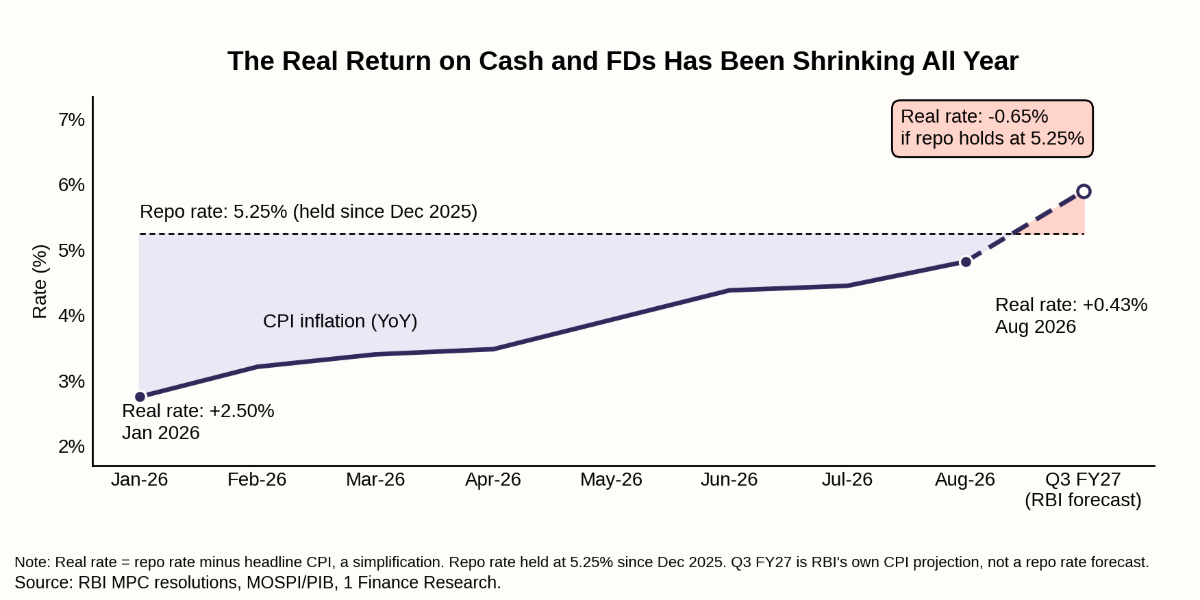
India's CPI inflation rose to 4.82% year-on-year in August 2026, the eighth straight monthly increase since the government rebased the index to 2024=100 in January. The series started at 2.75% in January and has climbed almost every month since.
Break the 4.82% headline down into its 12 components and one number jumps out immediately: Personal Care, Social Protection & Related, the group that carries gold and silver jewellery, is running at 15.17% year-on-year, nearly double the next-highest category and more than three times the headline rate. Everything else is far more ordinary. Restaurants and accommodation are next at 8.38%, food and beverages at 5.66%, and from there the list settles into a tight band between 1.3% and 4.7% across paan/tobacco, transport, education, clothing, housing, and the rest.
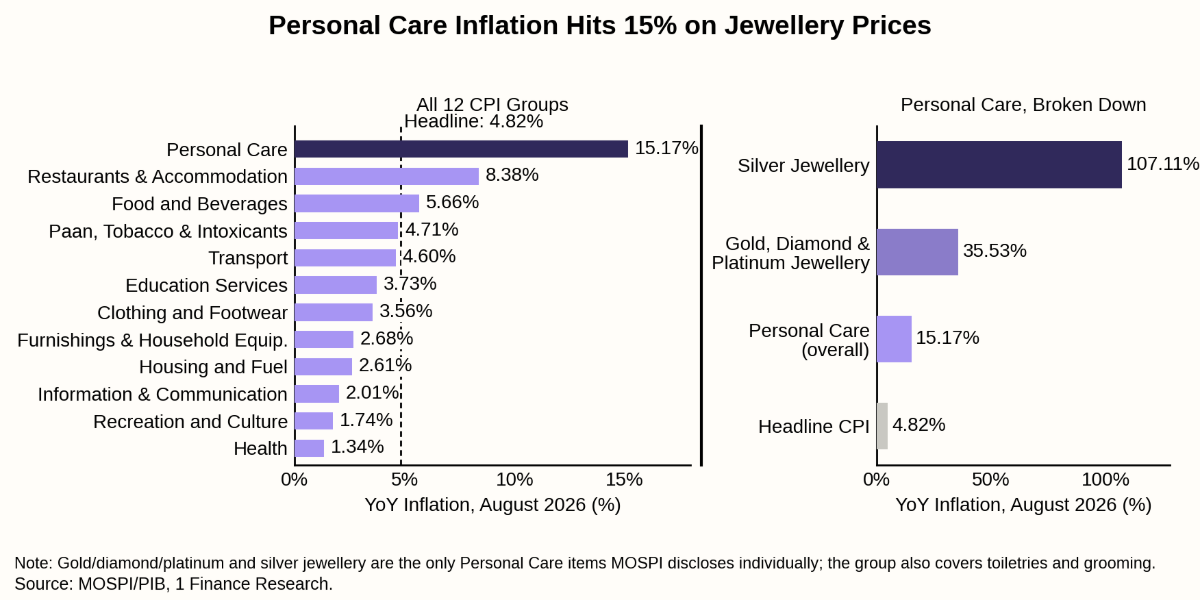
The story is a global one, not a domestic demand story. Gold and silver prices have been on a sustained rally through 2026, and because jewellery sits inside this CPI group, that price action mechanically pulls the group's inflation reading up regardless of how much Indian households are actually buying. It's the same distortion that shows up when core inflation is split with and without precious metals: strip gold and silver out, and the rest of the basket looks a lot calmer than the 4.82% headline implies.
Real Returns on Cash and FDs Keep Shrinking
RBI has held the repo rate at 5.25% since December 2025, through four straight reviews. Over the same period, CPI inflation climbed from 2.75% to 4.82% — pulling the real rate down from roughly 2.5% in January to under half a point by August. A fixed deposit or short-duration fund near the repo rate is barely beating inflation already; if RBI's own Q3 FY27 forecast of 5.9% plays out while rates stay put, real returns turn negative, and RBI's neutral stance offers no guarantee of a hike to close that gap.
We'd flag this now: wholesale inflation hit 9.92% in August, more than double the retail number, with fuel and power near 23%. Wholesale pressure typically feeds into retail prices with a lag, which is the strongest reason we wouldn't call RBI's October decision a formality.
With real returns already this thin, the same question of where value holds up was front and centre at this month's BRICS summit, where reducing dependence on the dollar was back on the agenda.
BRICS Flexes Its Economic Weight at the New Delhi Summit
India hosted the 18th BRICS Summit in New Delhi on September 12 to 13, 2026, with Xi Jinping and Vladimir Putin both attending. The bloc, spanning Brazil, Russia, India, China, South Africa, Egypt, Ethiopia, Iran, the UAE and Indonesia, accounts for roughly 40% of global GDP.
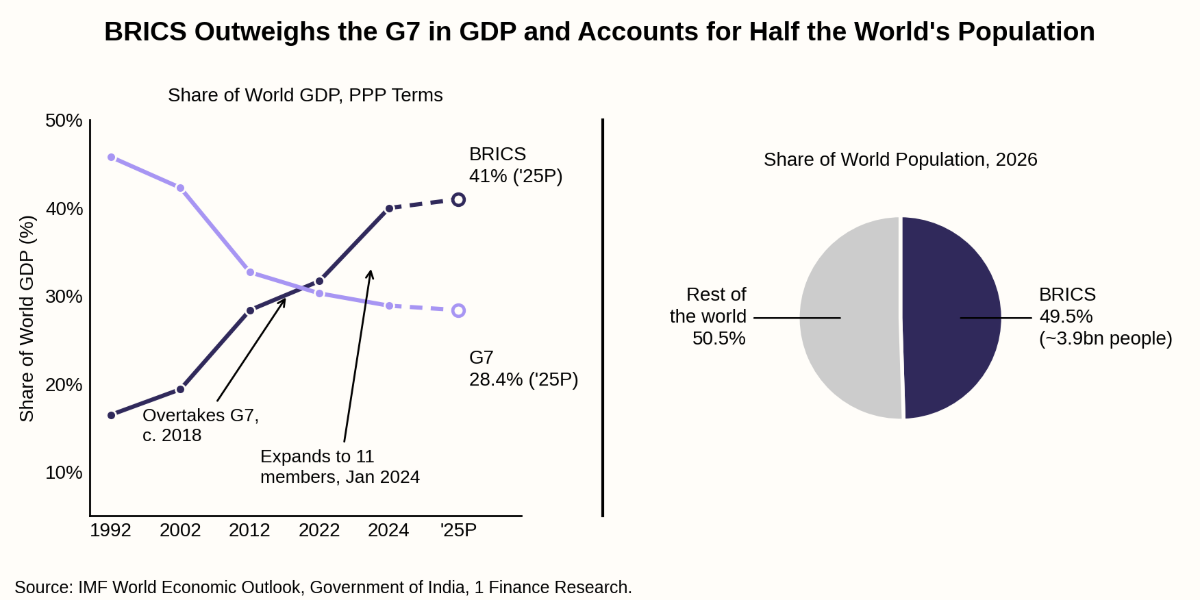
The joint declaration raised concerns over "unilateral tariff and non-tariff measures." It never named the US. India itself is still absorbing tariff exposure on its own US-bound exports even as it signs that language.
India's US Tariff Rate Keeps Shifting
Washington's reciprocal tariff on Indian exports opened at 25% in August 2025, then jumped to 50% within three weeks after a separate penalty tied to India's Russian crude purchases stacked on top.
The US paused that penalty in February 2026. The same month, the US Supreme Court struck down the legal basis for the original tariff, forcing a refiling under a different statute at 10%. That rate has held since, carried into a new legal basis again in July, and remains in effect. Talks over a lower preferential rate remain unresolved as of this writing.
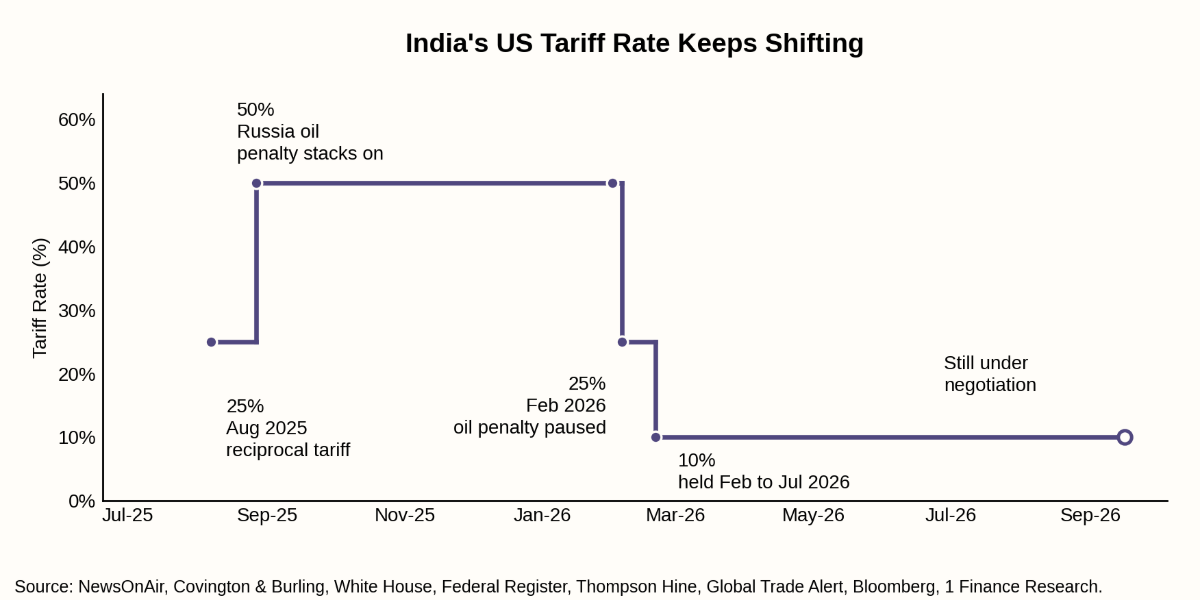
The number to watch isn't 10% itself; it's the pattern: three separate legal bases in twelve months. That instability, more than the tariff level, is what's kept FII flows cautious and added to rupee pressure through the year.
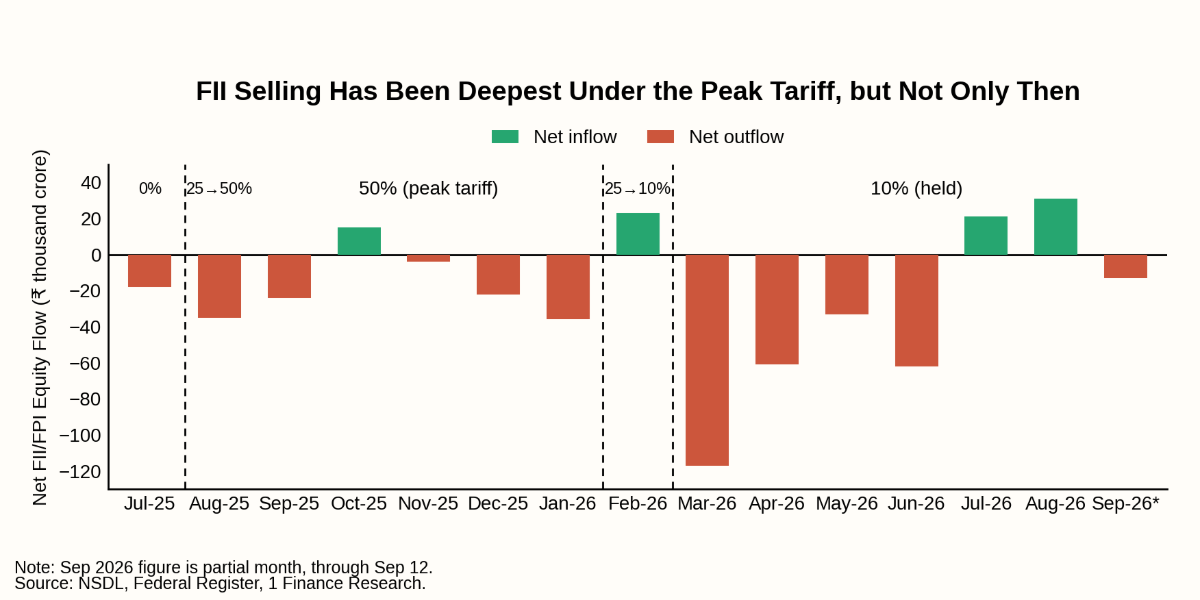
The data backs this. The escalation to 50% in August 2025 lines up with that year's first major outflow spike. The cut to 10% in February 2026 lines up with the strongest inflow month in 17 months. But the worst month on record, March 2026's ₹1.17 lakh crore outflow, came while the tariff was already down to 10%, and outflows stayed heavy through June. Tariffs moved sentiment at the turning points. Something else drove the selloff in between.
Rupee Settlement Still Grows One Corridor at a Time
A quieter shift has been building alongside the tariff dispute: India settling more trade directly in local currencies. The clearest example is the India-Indonesia corridor, where rupee-rupiah settlement grew 163% year-on-year to $8.45 billion in the first two months of 2026 alone.
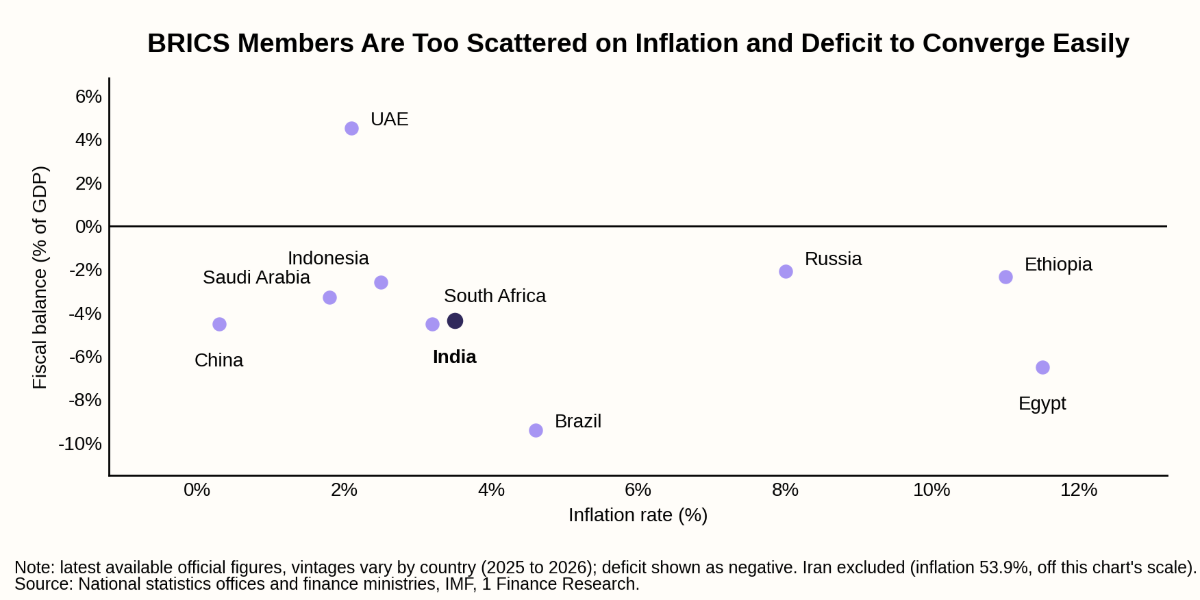
Each new corridor needs a correspondent bank willing to open the account, and a trade balance that doesn't leave one side holding currency it can't easily spend. That's why this stays a gradual, corridor-by-corridor trend, and why a shared BRICS currency remains a much harder problem: it would need member economies' inflation and fiscal positions to converge, and BRICS is nowhere close, from China's near-zero inflation to double digits in Ethiopia and Egypt.
We'd keep this in the long-term dollar-exposure conversation with clients. It isn't a near-term positioning call.
The Dollar Is Gaining Ground in Global Payments
Set against that corridor-by-corridor story, the aggregate picture cuts the other way. The dollar's share of global SWIFT payments rose from roughly 40% in August 2022 to 50.99% by July 2026, the highest in over a decade. Strip out intra-Eurozone euro payments, and its share of everything else runs closer to 60%. The yuan, the currency most often pitched as the dollar's structural rival, sits at just 3.10%, smaller than the Canadian dollar and barely moved in two years.
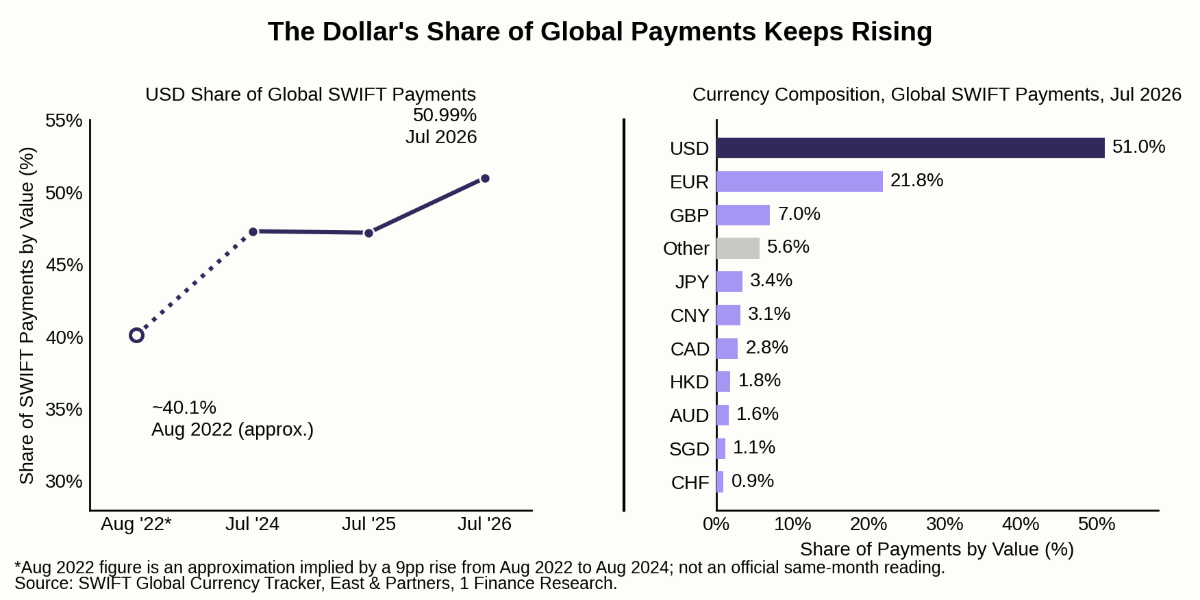
The two trends aren't in tension so much as operating at different scales. Bilateral rupee corridors are growing fast off a tiny base. The dollar's role in the system that actually clears global trade is consolidating. Both are true.
That consolidation is also why what the Fed does next matters more to India than any BRICS declaration. A bloc can talk about dollar dependency. It can't yet out-vote what still clears 60% of the world's non-Eurozone payments.
What Advisors Should Watch as These Threads Converge
The next month will tell us how much of this is noise and how much is a genuine turning point. RBI's MPC meets October 5 to 7 with the repo rate gap to the Fed at its tightest point in over a year and inflation still climbing, its first live test since the Fed moved. The Fed itself follows in late October or early December, and India's preferential tariff rate talks remain unresolved as of this writing.
For client portfolios, the read-through is straightforward on cash and cautious everywhere else. Fixed deposits and short-duration debt priced off the repo rate are barely keeping pace with inflation in real terms, and that's before accounting for the possibility RBI is forced to hold even as growth data softens. Assets skewed toward gold are being carried by a global rally that isn't obviously connected to Indian demand, worth flagging to clients who read the Personal Care print as a domestic story. And the de-dollarisation trend, while real, is still a corridor-by-corridor story too small to change currency positioning today; it belongs in the long-term conversation, not this quarter's allocation calls.
Key levels to track: repo rate at 5.25%, CPI at 4.82%, WPI at 9.92%, USD/INR at 95.96 with RBI defending the 96 level, and the Fed funds rate at 3.75% to 4.00% with a 4.1% year-end median projection. Track upcoming release dates on our live economic calendar.